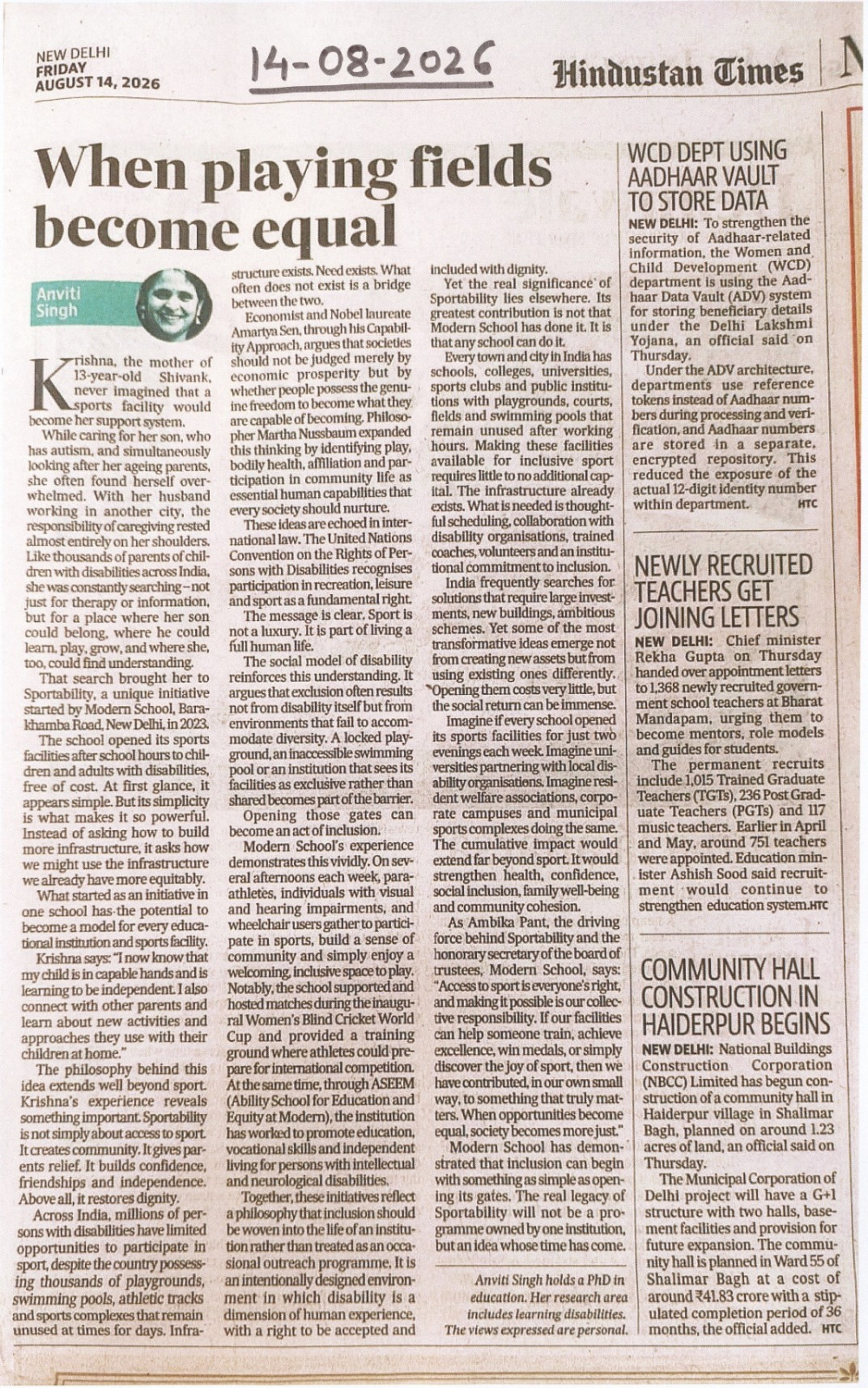






Recently Dr. Anviti Singh a dear friend, forwarded an interview of Dr. Christophe Golé, Professor of Mathematical Sciences at Smith College and co-author of Do Plants Know Math? published on May 18, 2025 in the Times of India under the title “Plants Embody Math – They Are Little Calculators, Producing Fibonacci Sequences.” The interview immediately caught my attention.
As a math educator of Primary School, I felt proud and inspired. I realized that I have already been introducing my young learners to the magic of the Fibonacci Sequence—but in the simplest way possible, without overwhelming them with heavy definitions.
I like to present Fibonacci as a special pattern of numbers: 0, 1, 1, 2, 3, 5, 8, 13, 21, 34, 55 …
It starts with 0 and 1, each new number is simply the sum of the two numbers before it.
For example: 0+1=1, 8+13=21, 1+1=2, 13+21=34, 1+2=3, 21+34=55, 2+3=5, 3+5=8, 5+8=13, 34+55=89 and so on… infinitely!
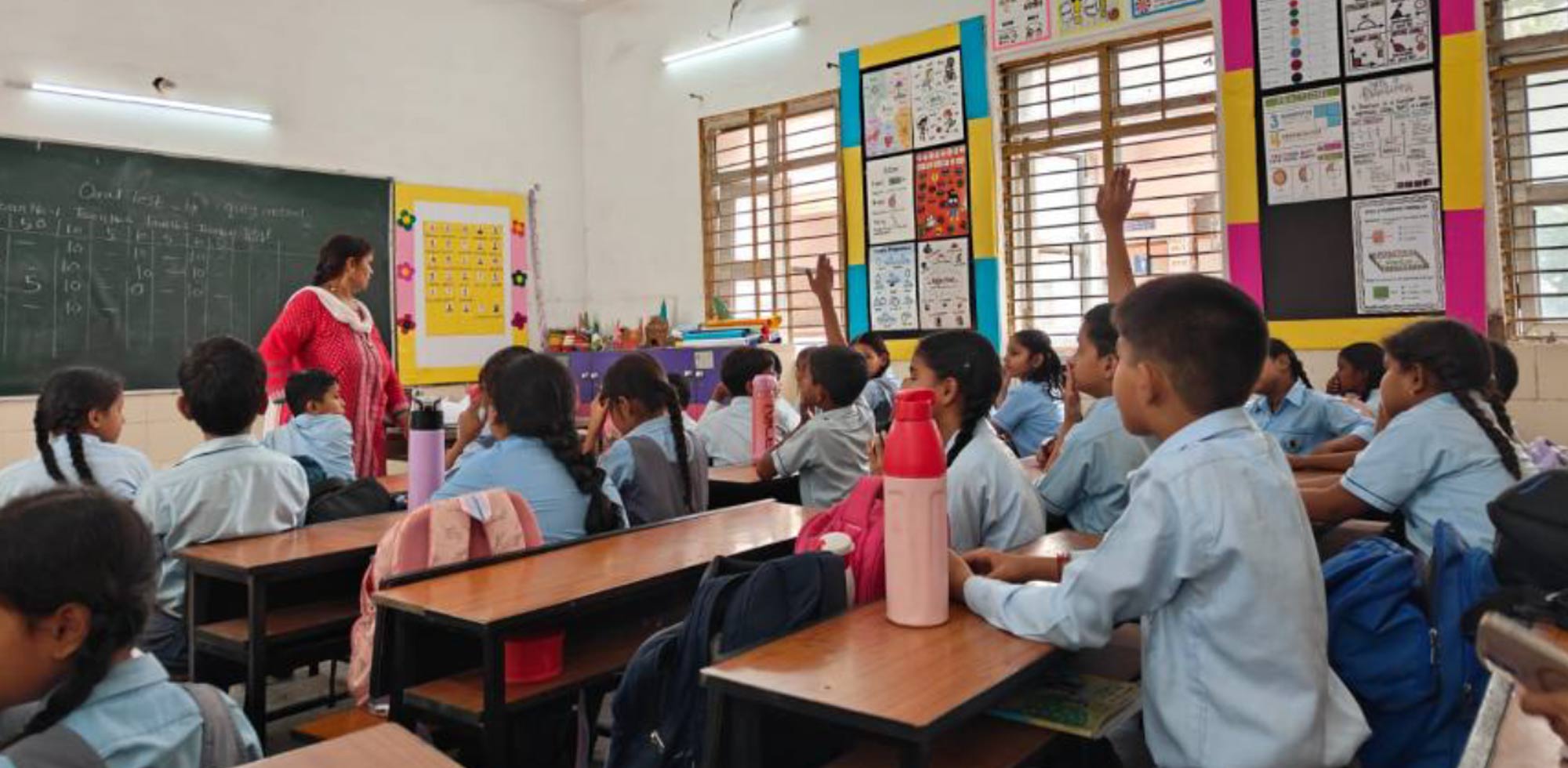
Once children see this simple rule, their eyes light up. To make the experience richer, I connect the sequence with nature—the spirals of pinecones, the arrangement of leaves, the petals of flowers, and the mesmerizing patterns in sunflowers. The best moment is when my students go out searching for these patterns in the world around them and proudly bring back their discoveries.
To deepen their appreciation, I also share a bit of history: this sequence was introduced to Western mathematics in the 13th century by Leonardo of Pisa, popularly known as Fibonacci. Suddenly, numbers do not feel abstract—they feel alive, connected to stories, people, and the natural world.
To keep curiosity flowing, I often ask them simple, story-based questions:
- Maya is creating a pattern of flower petals. She starts with 1 petal, followed by 1 petal, then 2 petals, 3 petals, 5 petals, 8 petals and so on. How many petals will she have by the 9th flower?
- A sunflower grows seeds in spirals following the Fibonacci sequence. If the 5th spiral has 5 seeds, how many seeds will be in the 8th spiral?
- A beehive expands following the Fibonacci sequence. If the initial section has 1 cell, the second section has 1 cell, and the third section has 2 cells, how many cells will the 9th section have?
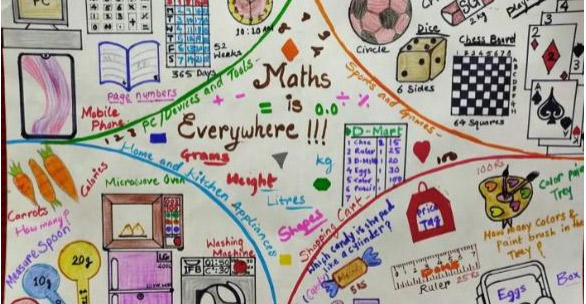
These little exercises not only build number sense but also show students that mathematics is everywhere—woven into the fabric of life itself creating beautiful patterns.
For me, teaching Fibonacci is not just about numbers or patterns. It is from Leonardo to Leaves. It is about wonder, discovery, and showing children that math is not confined to textbooks—it grows in sunflowers, blooms in petals, and lives in the curiosity of young minds.

Ms. Anvita Mishra
Modern School
Vasant Vihar
I have been teaching Mathematics and Environmental Studies at Modern School, Vasant Vihar, for over 20 years. Along with my teaching role, I also serve as the Timetable In-charge for the Junior School and the Academic In-charge for Grades I to V.
Over the years, I have had the privilege of working with creative young minds who are always eager to learn, question, and explore. For me, teaching is about creating experiences that spark curiosity and make learning joyful. I believe that when children enjoy the process, true learning happens naturally.