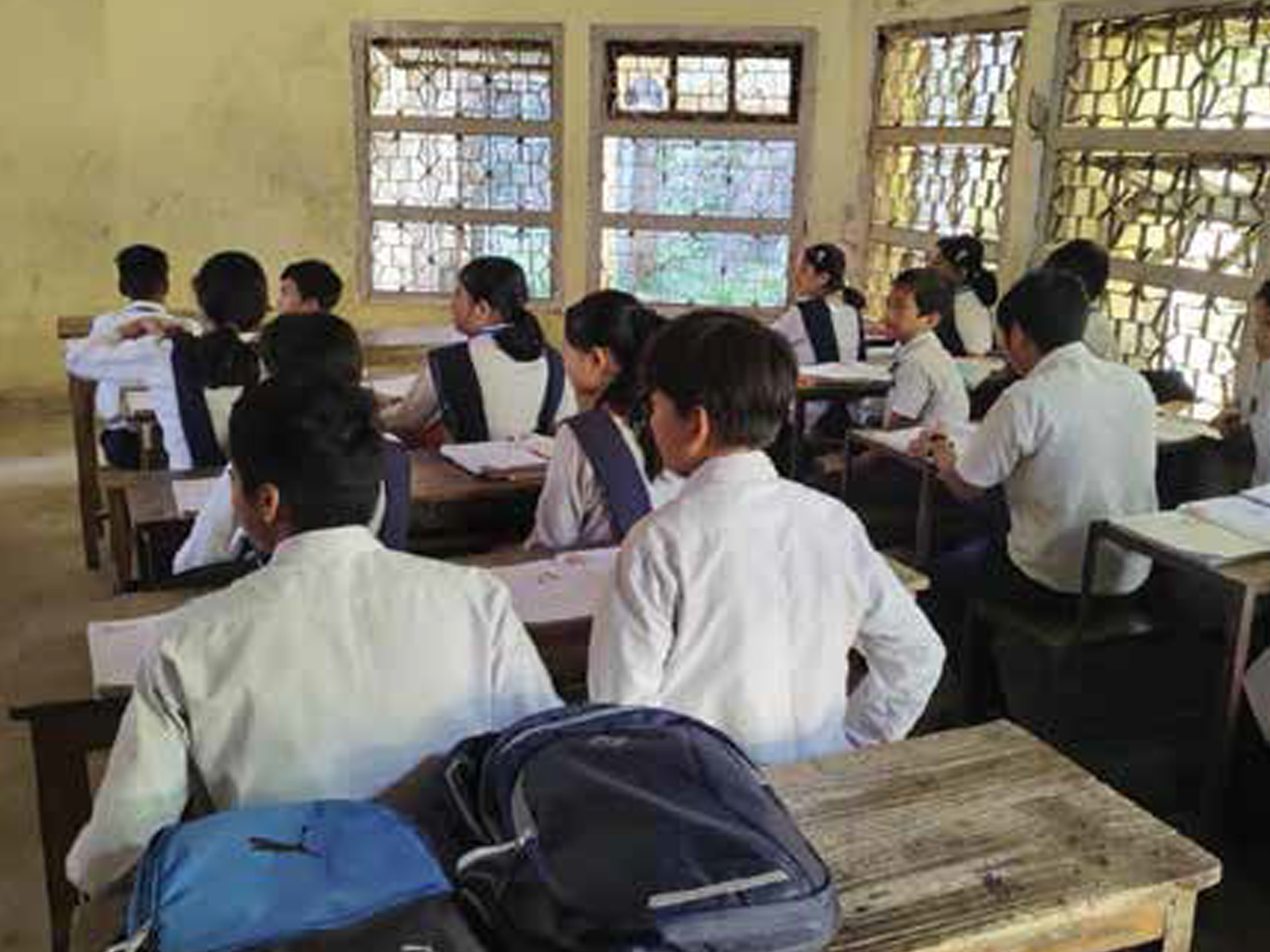






Despite the promise of the RTE Act government primary schools are vanishing quietly and rapidly (Mathew, A. 2022). Over the last decade, there has been a steady decline in the number of government schools across the country. The latest example is Uttar Pradesh, where primary schools with 50 or fewer students are soon to be merged with nearby secondary schools. (Hindustan Times, 2025). There were 1,62,228 government schools in Uttar Pradesh in 2014-15, which has now dwindled to 1,37,102 in 2023-24. This number is going to decrease further now. Under the guise of rationalization, the process of closure or merging of schools began sometime after The Right to Education Act, enacted in 2010. For the first time the government schools were merged in 2013-14 and since then every year in different states the same story has been repeated (Rao, S;Ganguly, S;Singh, J. & Dash, R.R, 2017). Consequently, the Right to Education Act is being violated. What is this rationalization? Under rationalization, to maximise use of available resources and facilities, primary schools with low or zero enrolment are merged with those secondary schools (MHRD,2016) where facilities like a library, sports complex, laboratory, computer room, etc., and an adequate number of teachers are available and children can get quality education. Along with this, in some states the objective is also to convert the existing primary schools into Bal Vatika (Hindustan Times, 2025).
Education policy, Proliferation of private schools & parental choice
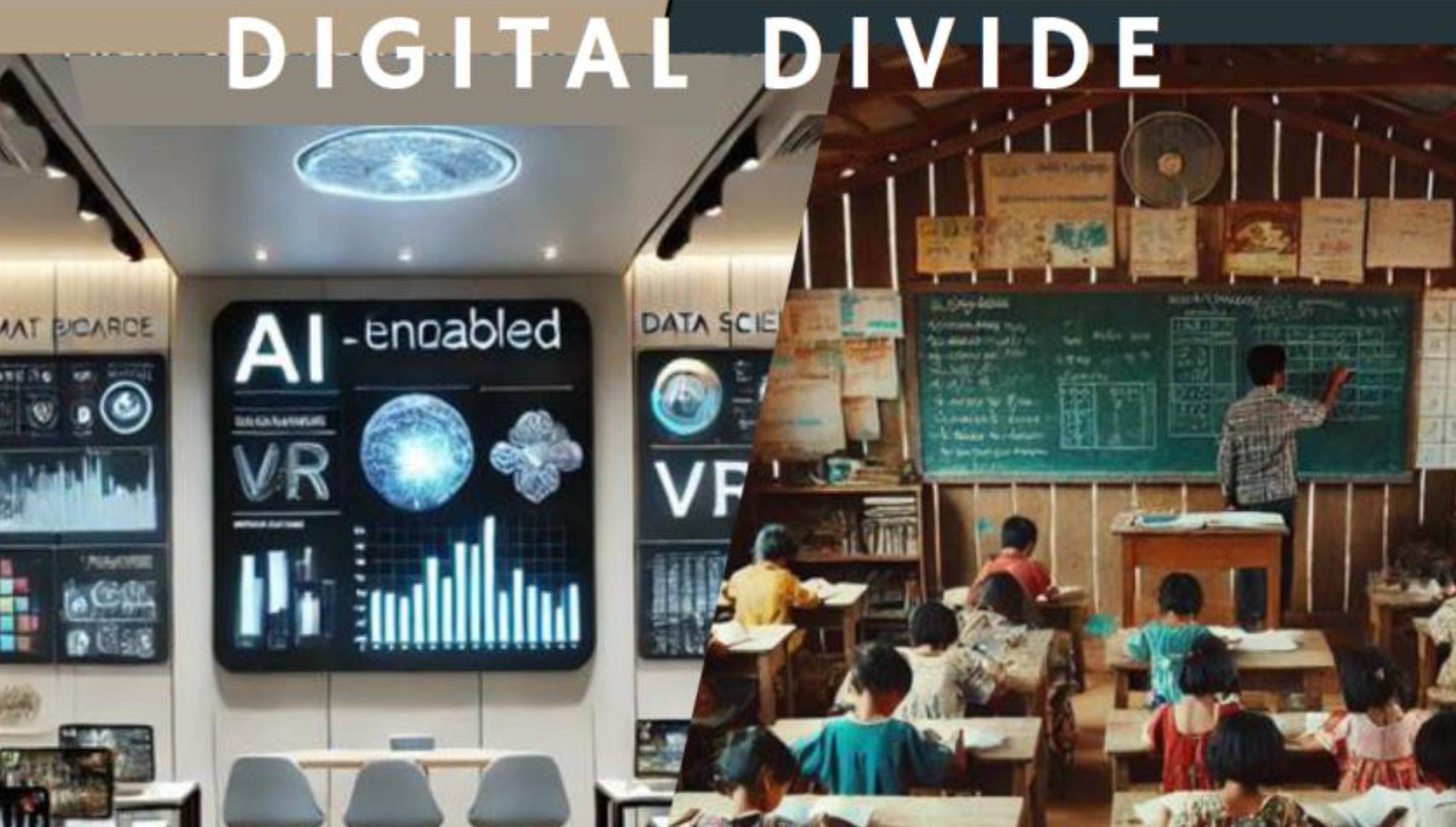
The fact that when the government primary schools were being merged or closed, at the same time all over India there was mushrooming of affordable private schools or budget private schools. With maximum decline in percentage of government schools i.e 24.1%, Madhya Pradesh tops the list. At the same time, the highest increase in the number of private schools happened in Bihar. Whereas in 2014-15 there were only 3284 private schools, in 2023-24 it skyrocketed to 9167 i.e. an increase of 179.4 %. In Uttar Pradesh, it was 24.9 % where the numbers increased from 77,330 to 96,635. (Jagran Josh, 2025).
This surge in private schools shows an increasing parental trust in private schools and flaws in state education policy.
The question is who is responsible for this? Is this the result of systemic failure? Was it poor policy, ineffective implementation, or a deliberate attempt to boost privatisation of education? Why parents became disillusioned with government schools and shifted to private schools?
If experts are to believe, due to the gradual decline in the quality of education in government schools, (Indian Express, 2025) the number of students kept decreasing to such an extent that they came to the verge of closure.
The question remains why did the quality of government schools decrease? At the root of this are those policies under which Guruji, Shikshakarmi, and other such teachers were appointed in the schools. There was a huge increase in the number of students in government schools due to universalisation of elementary education. During last decade of the 20th century, District Primary Education Project too brought students from marginalised section of the society into government schools (Govinda, R. 2017) and to deal with shortage of teachers untrained teachers like shikshamitra in Uttar Pradesh, Guruji in Madhy Pradesh, and Shiksakarmi in Rajsthan (Education for all in India, 2025) were appointed with the belief that anyone can become a teacher with basic training. Such cadre of teachers known as para teachers disrupted the process of appointing permanent teachers, affecting the quality of education provided in government schools (Govinda, R. & Mathew, A., 2018). In remote and rural areas there were many single teacher schools and to deal with such situations the concept of multigrade teaching came into existence where a single teacher started teaching children from first grade to fifth grade at the same time. Naturally the quality of education began to deteriorate and even after spending four-five years in school, children could not attain grade level learning outcomes.
At the same time mushrooming of private schools was underway across the country (Pankaj, A., Poornima, M., & Kaur, R., 2021), and with this began creating a narrative where people like James Tooley began to promote the concept of affordable private schools under the pretext of exposing the ineffectiveness of government schools. As a matter of fact, in the early 2000s, James Tooley, a British economist, advocated for low-cost private schooling in India claiming that unrecognized low-fee private schools outperformed government schools (Tooley, J. 2017) in learning outcomes and cost-effectiveness, based on his study funded by the Templeton Foundation. Tooley proposed a scalable, low-cost education targeting poor families, rebranding unregulated schools as affordable private schools accessible to the poor. Tooley along with other organizations promoted this model emphasizing the failure of government schools while using limited evidence to claim Affordable Private Schools (APS) provided high-quality education (Tooley & Dixon, 2003). And as we all can see, they succeeded in their campaign.
Impact of school closure and merger on marginalised section of the society
In rural areas, multigrade classrooms and single-teacher schools left families with little choice but to shift to private schools. In urban areas, the growing aspiration for English medium education pushed many towards the same path. Yet question remains how much of this education is genuinely provided in English, and to what extent do these schools meet acceptable quality standards? That is a matter of deeper research. What is certain however is that the marginalised section of the society is being gradually excluded from their fundamental right to education (Bag, P., & Swetashree, S. 2022). This growing exclusion often triggered by the closure or merger of schools, deserves immediate attention.
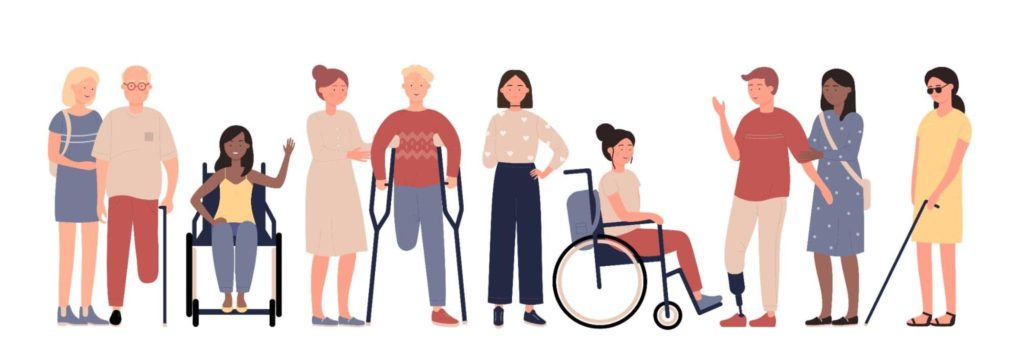
No matter how much the government tries to justify it, research clearly shows that the closure or merger of government schools is hurting marginalised section of the society and children with disabilities and girls are most affected Education for all, 2023). Children with disabilities, who are already few in schools, often drop out completely when the nearest school shifts. The situation is equally stressful for girls. Parents are hesitant to send them to distant schools, or co-ed schools, therefore, the girls remain at home (Srivastava, K). This not only deprives them of education but also increases the risk of early marriage. The merger or closure of schools ends up being a double blow to girls; first, they are denied the opportunity to learn, and second, they are pushed into marriage before they are ready. And let's not forget-it's also a violation of the Right to Education. Because when schools disappear, in many areas there simply isn't another one within a kilometre as mandated by Right to Education Act.
As mentioned earlier, the process of rationalisation-undertaken in the name of maximising resource efficiency-began three years after the enactment of Right to Education (RTE) Act. The closure and merger of schools under this framework continues even today as the news from Uttar Pradesh testifies. This is bound to have far reached consequences, and sadly, they will not be positive. By the time the system begins to comprehend the magnitude of this shift, we may have already gone too far. A large segment of society will be denied its fundamental Right to Education, while the divide between the rich and poor-and between caste and class-will have grown deeper.
It is not that the closure or merger of government schools cannot be checked. There is evidence to show that customised intervention (Chauhan & Kumar) through public-private partnerships, community awareness, (Arpitha, I., 2024) and leveraging EdTech initiatives, has enabled government schools, which were once on the verge of closure to not only flourish but also show improved learning outcomes.
However, this requires all stakeholders to work in true synergy. Such a collective effort demands strong will power and unwavering support from government agencies.
References
Bag, P., & Swetashree, S. (2022). Rationalisation of Exclusion. Social Scientist, 50(5/6 (588-589), 87-102.
Chauhan, V.K. & Kumar, A. (n.d). Challenging the Notion of Ineffectiveness of Government Schools: A Case Study. Azim Premji University. https://practiceconnect.azimpremjiuniversity.edu.in/challenging-widespread-notion-of-ineffectiveness-of-government-schools-a-case-study/ Education for All in India. (2023). Impact of school closure and mergers on access to education in India, 2023: An analysis of uDISEPlus 2021-22 data. https://educationforallinindia.com/impact-of-school-closures-and-mergers-in-india/ Education for all in India. (2025). Guest teachers in schools in India: A comprehensive analysis https://educationforallinindia.com/guest-teachers-in-schools-in-india-a-comprehensive-analysis-2025/ Govinda, R. & Matthew, A. (2018). Universalisation of elementary education in India: Story of missed targets and unkept promises. Council for Social Development. https://csdindia.org/wp-content/uploads/2018/06/Universalisation-of-Elementary-Education-in-India-Prof-Govinda.pdf
Härmä, J. (2011). Low cost private schooling in India: Is it pro poor and equitable?. International journal of educational development, 31(4), 350-356.
https://bpb-us-e2.wpmucdn.com/sites.middlebury.edu/dist/b/6007/files/2013/01/Low-cost-private-schooling-in-India.pdf
Hindustan Times (22 June 2025). Uttar Pradesh govt. stands firm on school merger despite opposition. https://www.hindustantimes.com/cities/lucknow-news/uttar-pradesh-govt-stands-firm-on-school-merger-despite-opposition-101750534711040.html
I, Arpitha (15 July 2024). SDMC members, villagers save government school from merger in Karnataka. The New Indian Express. https://www.newindianexpress.com/states/karnataka/2024/Jul/15/sdmc-members-villagers-save-government-school-from-merger-in-karnataka Indian Express (2025). School enrolment decline in last 2 years, elementary level sees 8% drop: govt. https://indianexpress.com/article/education/govt-data-reveals-drop-school-enrolments-8-per-cent-decline-across-india-education-crisis-nep-new-education-policy-udise-9911200/ Mathew, A. (7 October 2022). Delhi government ‘merges’ close to 100 schools, fails to inform parents. https://www.nationalheraldindia.com/india/delhi-govt-merges-close-to-100-schools-fails-to-inform-parents
Ministry of Human Resource Development.(2016). Guidelines for rationalising small schools. https://www.education.gov.in/sites/upload_files/mhrd/files/Guidelines%20for%20Rationalization.pdf Pankaj, A., Poornima, M., & Kaur, R., (2021). Reach and Role of Private Schools in India. Council for Social Development. https://csdindia.org/wp-content/uploads/2024/05/Reach-and-role-of-private-schools-in-India.pdf Rao, S., Ganguly, S., Singh, J., & Dash, R. R. (2017). School closures and mergers: a multi-state study of policy and its impact on public education system in Telengana, Odisha and Rajasthan. Gurgaon: Save the Children https://www.researchgate.net/publication/320056186_School_Closures_and_Mergers_A_Multi-state_study_of_policy_and_its_impact_on_public_education_system_-_Telangana_Odisha_and_Rajasthan_2017 Srivastava, K. (n.d). Scheme of Merger of Schools : A conscious denial of education to children of poor and vulnerable communities. A study on merger of schools in 5 distictsof Rajasthan: Jaipur City, Alwar, Pali, Baran, Bundi https://www.academia.edu/8772796/Scheme_of_Merger_of_Schools_A_conscious_denial_of_education_to_children_of_poor_and_vulnerable_communities Tooley, J. (2017). Private schools for the poor. https://www.femi.org/wp-content/uploads/2017/08/Private-Schools-for-the-Poor-James-Tooley.pdf Tooley, J. & Dixon, P. (2003). Private schools for the poor: A case study from India https://fordhaminstitute.org/national/commentary/private-schools-poor-case-study-india Tripathi, V. (2025). Government schools decline by 8% in 10 years; state wise report. Jagaran Josh. https://www.jagranjosh.com/current-affairs/government-schools-decline-private-schools-increase-2023-24-1739788554-1