




"From Contact to Continuity: Rethinking School to Home Engagement for Better Learning Outcomes.
By Malvika Singh Shanker
Introduction
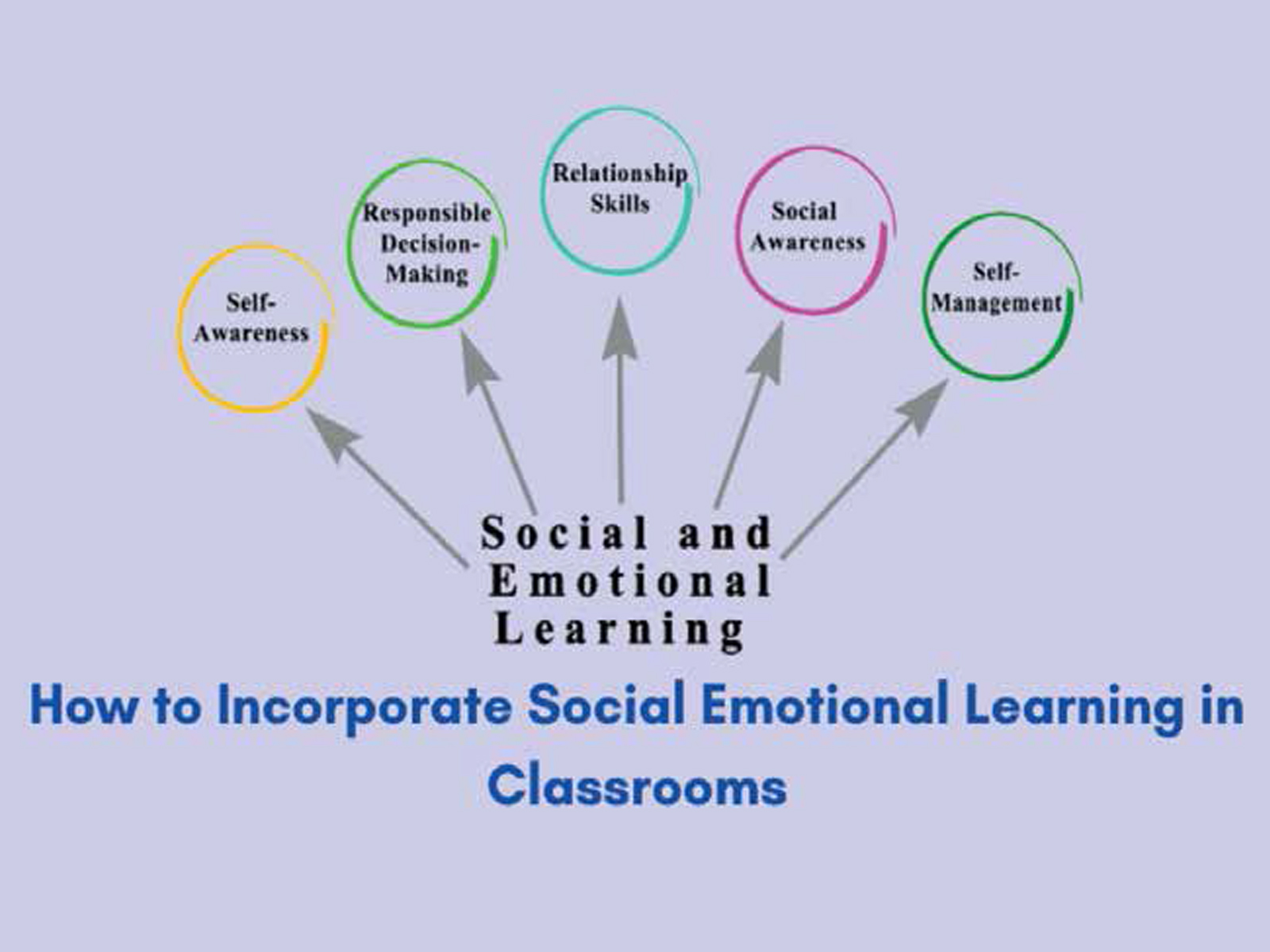
In most schools, school-to-parent interaction is structured around a familiar set of touchpoints: parent–teacher meetings (PTMs), report cards, and occasional school functions. While these serve important administrative and relational functions, research shows that the nature of parental engagement and the extent to which the language of learning is reinforced at home, for example through conversation, reading and reflection- has a significant impact on student learning outcomes. (OECD, 2012; AITSL, 2024; Kim, 2022) A learning outcome is not just about what a child can do, but what they can understand, explain, and apply in real life ( NCERT, 2017). For example, if a socio-emotional learning outcome is “recognises different emotions and makes deliberate efforts to regulate them appropriately” (ibid), it may be taught in school through life skills programmes and daily classroom interactions. However, when parents are kept in the loop and given simple tools and language to model this behaviour at home, the learning moves beyond instruction and becomes a lived experience that the child absorbs as a life lesson.
Evidence from learning sciences (Elsevier, Vygotsky's theory) which highlights the role of social and cultural contexts in shaping learning), international assessments such as those by the OECD and Indian policy frameworks point to a fundamental insight: learning does not occur in isolation within the classroom, but across multiple environments a child interacts with.
The National Curriculum Frameworks 2022 & 2023 emphasises that the home environment has a significant influence on a child’s development, while NEP-aligned guidelines describe parents as “pivotal” to learning and recognise the home as a child’s first site of education. Taken together, these frameworks reinforce that learning is shaped across contexts and therefore cannot be improved by schools alone.
If schools are to meaningfully improve student outcomes, they must move beyond episodic interactions that would constitute parental involvement and instead design systems that engage parents in creating continuity between home and school learning environments (Learning Village, n.d).
This article argues that improving learning outcomes requires a shift from a model of parent involvement and interaction (characterised by episodic, often one way, communication) to continuity-based parent engagement models (where learning is reinforced across home and school environments).
The question is no longer whether parents should be involved in education, but whether current models of involvement, often superficial and transactional, are sufficient. As education is increasingly viewed as a service, with families positioned as consumers, both schools and parents must move beyond episodic interaction. Schools must design systems that enable meaningful and sustainable engagement, while parents must take cues from these frameworks and actively engage with their child’s learning in everyday contexts.
This article aims to:
- Establish why continuity between home and school is essential for learning
- Situate the argument within learning theory, international research, and Indian policy frameworks such as NEP 2020 and the National Curriculum Framework
- Provide a practical framework for schools to move from episodic interaction to structured engagement
In doing so, it reframes parent engagement not as an additional responsibility, but as a core design element of effective schooling.
Understanding the Learning Context Beyond the Classroom
A typical school day runs from approximately 8:00 am to 2:00 pm, about six hours. Even accounting for rest and routine, children spend a significant proportion of their waking hours outside school. This is not a logistical detail, it is a learning reality for most students. Learning is a continuous process that does not begin and end within school hours. It extends across contexts, interactions, and experiences ( Vygotsky's theory, NCF, 2022). Recognising this, continuity is essential for designing effective educational systems, as it positions the home and school not as separate domains, but as interconnected components of a child’s learning ecosystem ( Ngadni, 2023).
Research (UNICEF,n.d )consistently distinguishes between School-based involvement (attending PTMs, events) and Home based engagement (discussions, reading, questioning). The difference is significant.
The Nature of Engagement
OECD PISA research(2012) suggests that home-based activities such as reading, discussion, and modelling behaviours are more strongly linked to cognitive and socio-emotional outcomes, and that high-quality engagement can help narrow achievement gaps across socio-economic groups. Crucially, these forms of engagement are less about parents’ educational qualifications and more about the quality of everyday interactions at home.
What matters, therefore, is not whether parents are able to “teach” content, but how they engage with their children. Learning is strengthened when children are encouraged to explain their thinking, reflect on ideas, ask questions, and engage in conversation (Quigly et.al. 2018). In this sense, parental engagement is less about instruction and more about interaction.
This has important implications for schools. When schools equip parents with simple, practical tools, such as prompts for discussion or strategies for reading together, they enable learning to be reinforced beyond the classroom. Over time, this continuity between school and home can significantly strengthen learning outcomes.
Similarly, early childhood research highlights that a large proportion of cognitive development occurs before formal schooling, shaped significantly by interactions within the home ( NCF, 2022; UNICEF). This further reinforces the idea that learning is not confined to formal instruction, but is built through everyday experiences and relationships.
Learning is Social
Educational theorists such as Lev Vygotsky emphasise that children learn through guided interaction within their environment. This means that learning is strengthened when it is:
- Reinforced across contexts
- Supported by consistent language
- Embedded in meaningful conversation
When there is alignment between home and school:
- Concepts are reinforced
- Vocabulary becomes familiar
- Confidence increases
Consistency between home and school is not desirable, it is necessary for effective learning.
Rethinking the Role of Parents: Beyond Instruction
A common assumption is that parents must be academically equipped to support their child’s learning. This assumption also leads to the propagation of the tuition culture. However, research challenges this notion.
Cross-national studies show that conversational engagement, talking about ideas, asking questions, encouraging thinking, are strong predictors of sustained learning support ( OECD PISA 2022). In contrast, research suggests that excessive direct instruction at home and over-involvement in homework can reduce students’ independence and limit opportunities for deeper understanding.
This distinction is particularly relevant in contexts where learning is supplemented by private tuition. Research on shadow education indicates that such support often mirrors formal schooling and prioritises content delivery and examination performance, rather than fostering conceptual understanding (Bray, 2018).
Learning is strengthened when children actively process ideas— by explaining their thinking, reflecting, and engaging in meaningful conversation—rather than passively receiving additional instruction. In contexts where both school and tuition emphasise content delivery, differences in language and approach may further fragment understanding rather than deepen it.
Policy Alignment: What NEP 2020 and NCF Emphasise
The National Education Policy 2020 recognises that learning begins before formal schooling, the home environment plays a central role in development and that parents are key partners in education ( NEP 2020)
Similarly, the National Curriculum Framework emphasises that play, interaction, and conversation as core to learning and that families play a significant role in supporting learning processes ( NCF-FS, 2022).
Together, these frameworks signal a clear shift- Education is not a service delivered by schools, it is a process maintained in tandem with families.
From Interaction to Engagement
Despite strong research and policy alignment, most schools continue to operate within an interaction-based model, characterised by PTMs, one way communication through educational portals and attending school functions. The shift to engagement means that there is continuous communication on both sides, parents are included and helped to understand how learning occurs, and when home becomes an extension of the school's learning environment. This is not about increasing the frequency of communication, but about changing its purpose.
What Schools Can Do: A Practical Framework
For schools looking to operationalise this shift, the following principles and strategies provide a starting point:
1. Shift Communication from Performance to Process Instead of focusing only on marks or outcomes, using PTMs to communicate how children learn, what skills are being developed and how a parent can support the learning process at home.
2. Provide Simple, Actionable Guidance Parents do not need complex instructions. Small, consistent actions are effective:
- Ask your child to explain one thing they learned today
- Spend 10 minutes reading together
- Encourage children to ask questions
Short audio or video messages can often be more effective than long written communication.
3. Ensure Consistency of Language Share with parents:
- Key vocabulary used in class
- Types of questions teachers ask
- Approaches to problem-solving
This allows reinforcement at home to align with classroom learning.
4. Train Teachers for Parent Engagement Teachers need support to:
- Communicate clearly across diverse contexts
- Translate pedagogy into accessible language
- Set boundaries while maintaining positive relationships
5. Move Beyond Episodic Models
PTMs and PTA meetings may be the primary formal mechanism but having low-intensity touchpoints like coffee mornings in smaller groups, video messages on learning and teaching, engaging readinglists or movie lists for the summer etc. to encourage parent-child engagement.
6. Maintain Structured and Safe Systems To ensure sustainability:
- Define communication protocols
- Policies for Parent Code of Conduct
- Use documented channels
- Maintain clarity on roles and expectations
This protects both the school and the relationship.
Conclusion
The evidence is consistent across research, theory, and policy:
- Learning is continuous
- It extends beyond the classroom
- It is shaped by interaction and environment
Schools therefore face a critical design question: Will learning remain confined to school hours, or will it be extended into the child’s daily life?
The answer lies in how schools engage with parents. Moving beyond PTMs is not an innovation, it is an alignment with what we already know about how children learn.
When schools create meaningful continuity between home and classroom, learning deepens, confidence grows and outcomes improve. And most importantly, education becomes not just something children attend, but something they live.
References
Annie E. Casey Foundation. (2025, July 27). The role of Parental involvement in students’ academic achievements. The Annie E. Casey Foundation. https://www.aecf.org/blog/parental involvement-is-key-to-student-success-research shows#:~:text=While%20both%20parental%20involvement%20a nd,are%20in%20raising%20student%20performance> Australian Institute for Teaching and School Leadership. (2024, June). Strengthening parent engagement to improve student outcomes. AITSL.
https://www.aitsl.edu.au/research/spotlights/strengthening parent-engagement-to-improve-student-outcomes Bhorkar, S., & Bray, M. (2018). The expansion and roles of private tutoring in India: From supplementation to supplantation. International Journal of Educational Development, 62, 148-156. Borgonovi, F., & Montt, G. (2012). Parental involvement in selected PISA countries and economies. Elsevier. (n.d.). Vygotsky’s theory. In ScienceDirect Topics. ScienceDirect.
https://www.sciencedirect.com/topics/psychology/vygotskys theory#:~:text=Vygotsky%20is%20best%20known%20for,interpr eted%20within%20this%20social%20framework Kim, S. (2022). Fifty years of parental involvement and achievement research: A second-order meta-analysis. Educational Research Review, 37, 100463.
Learning Village. (n.d.). Involvement vs. engagement. Learning Village. https://www.learningvillage.net/article/involvement-vs engagement#:~:text=Parent%20involvement%20and%20engage ment%20are%20both%20important,parents'%20insights%20
https://www.education.gov.in/sites/upload_files/mhrd/files/NEP _Final_English_0.pdf Ministry of Education, Government of India. (2023). National Curriculum Framework for School Education: Pre-draft. Ministry of Education.
https://www.education.gov.in/sites/upload_files/mhrd/files/NCF School-Education-Pre-Draft.pdf National Council of Educational Research and Training. (n.d.). Learning outcomes. NCERT. https://ncert.nic.in/learning outcome.php?ln=en Ngadni, I., & Shuang, C. Y. (2024). The Home-School Partnership in Early Childhood Education: Understanding The Challenges and Obstacles. International Journal of Academic Research in Progressive Education and Development, 13(3), 18-35. O’Connor, J. (2018). 100 ideas for primary teachers: Engaging parents. Bloomsbury Education.
https://www.bloomsbury.com/uk/100-ideas-for-primary teachers-engaging-parents-9781472955180/ Organisation for Economic Co-operation and Development. (n.d.). Education policy outlook. OECD. https://gpseducation.oecd.org/revieweducationpolicies/#!node= 41727&filter=all Press Information Bureau, Government of India. (2021, July 29). Cabinet approves new education initiatives [Press release]. PIB.
https://www.pib.gov.in/PressReleasePage.aspx? PRID=1728509&utm®=3&lang=2 Quigley, A., Muijs, D., & Stringer, E. (2018). Metacognition and Self Regulated Learning. Guidance Report. Education Endowment Foundation. UNICEF. (n.d.). Early childhood development. UNICEF. https://www.unicef.org/early-childhood-development